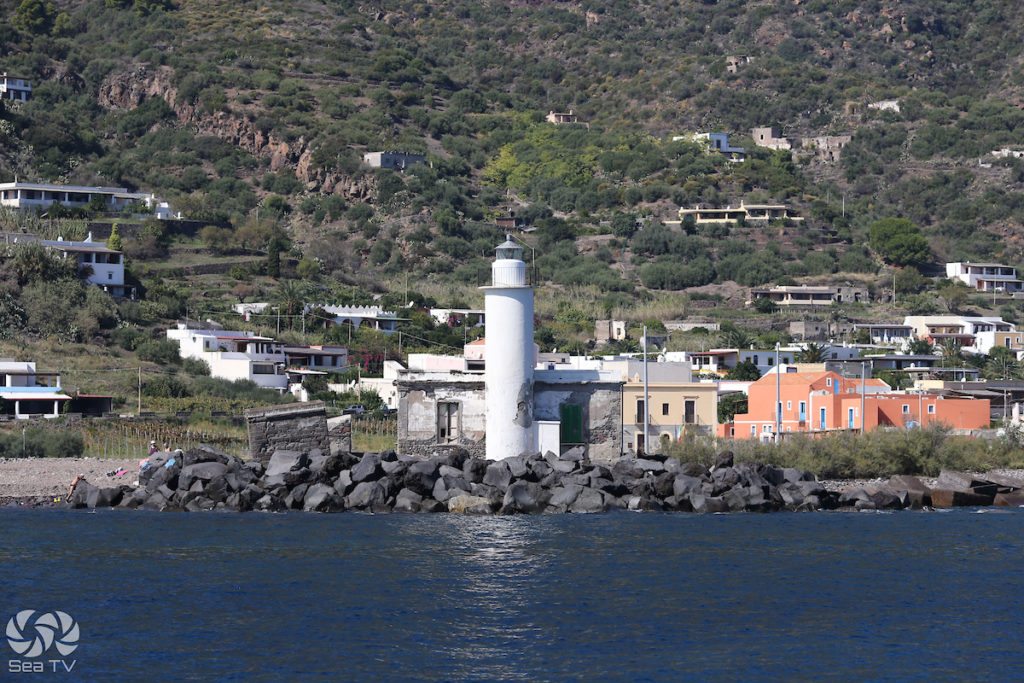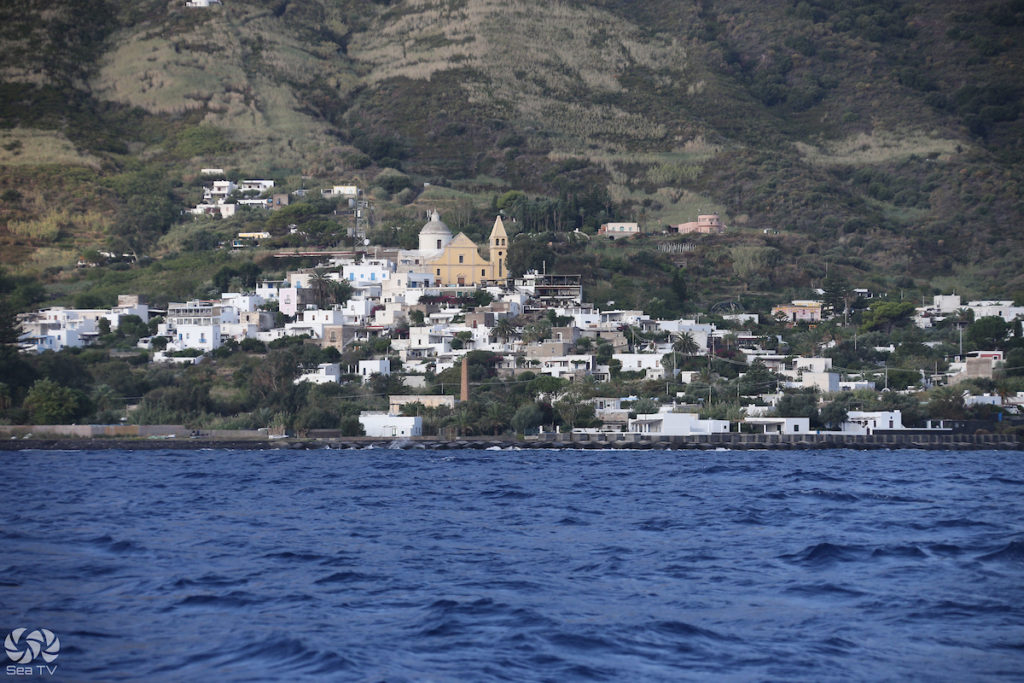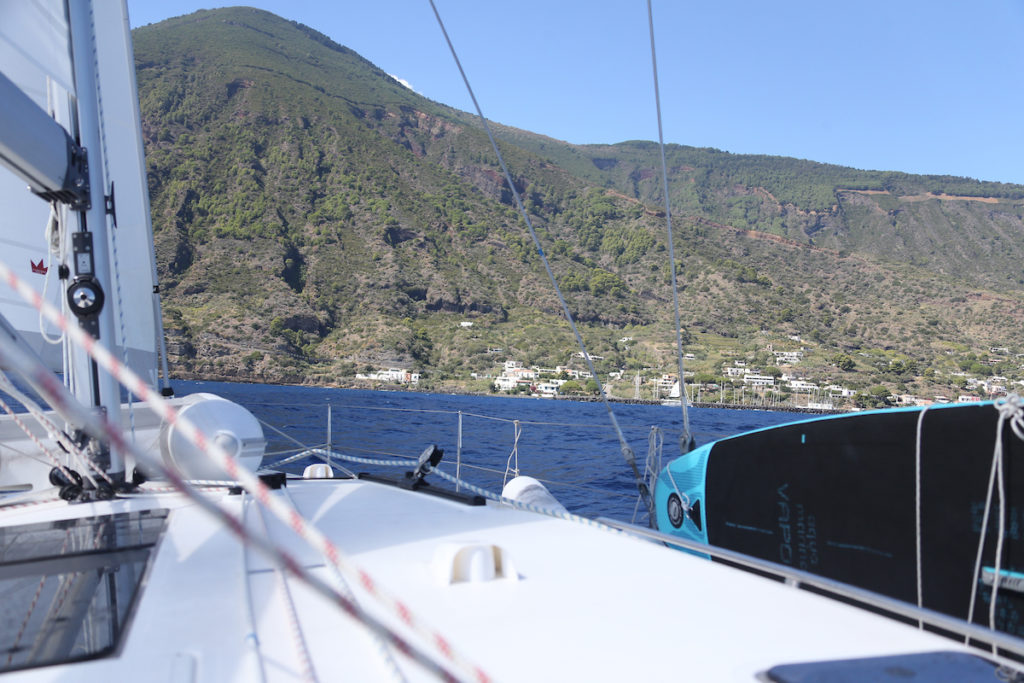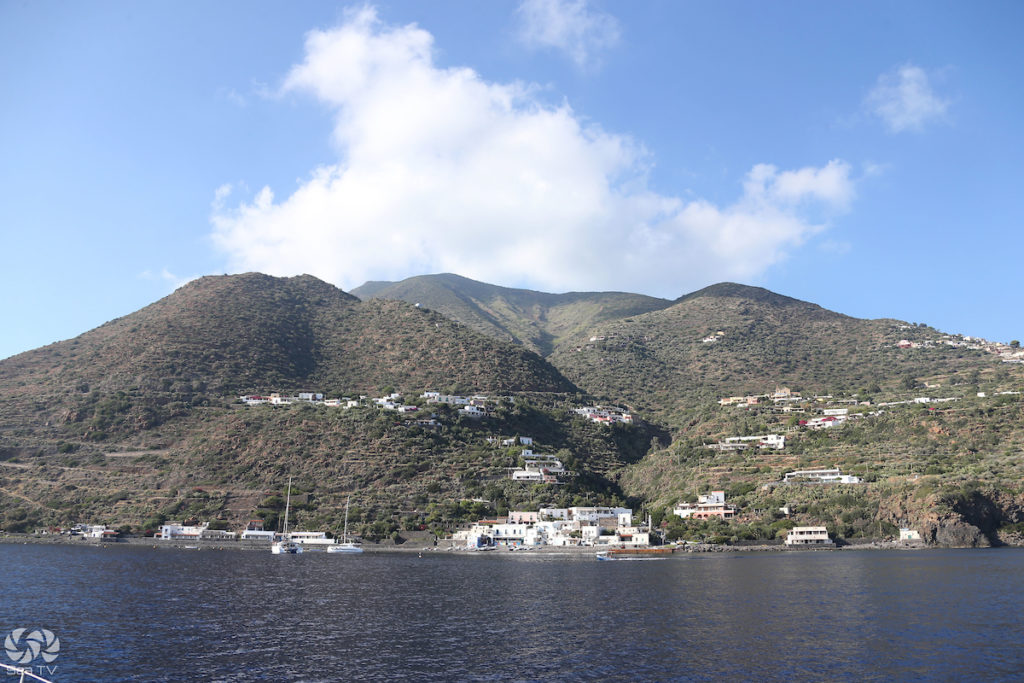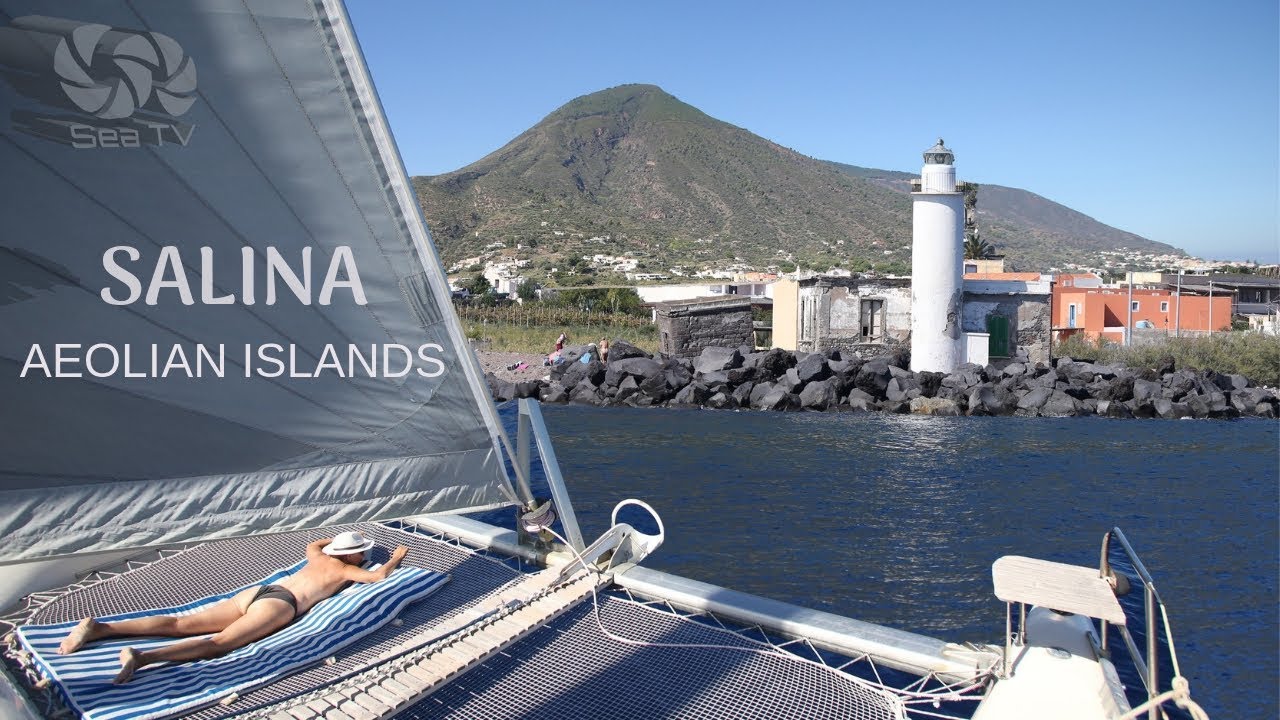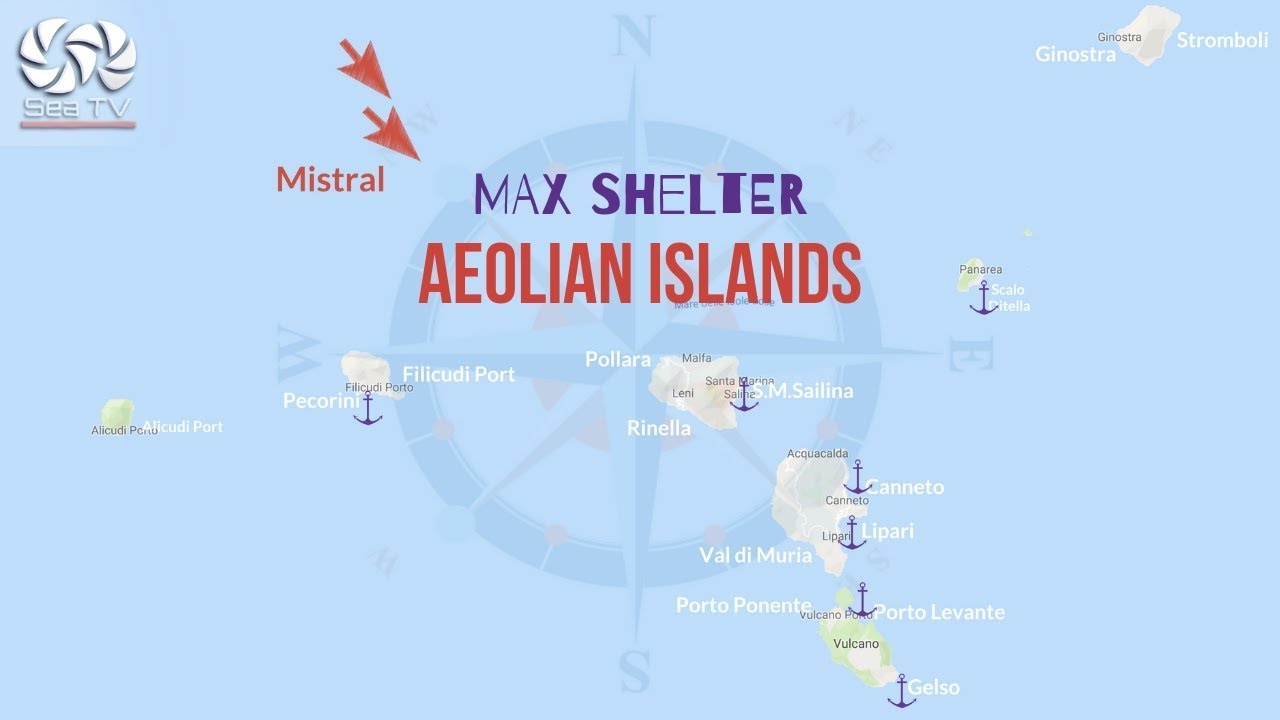

Salina is the second-largest of the Aeolian Islands — 27 km², and the only island in the archipelago with a natural freshwater source. That single fact explains everything: while the other islands are dry and volcanic, Salina is green. Vineyards cover the hillsides, capers grow wild on every stone wall, ferns and poplars crowd the valleys between its two extinct volcanic peaks — Monte Fossa delle Felci (962m, the highest point in the entire archipelago) and Monte dei Porri (860m). Salina produces two of the finest things in the Aeolians: Malvasia delle Lipari, the golden dessert wine, and capers, a Slow Food Presidium product picked by hand and exported worldwide. It is the quietest, most beautiful, and most authentically Italian of the seven islands.
⚓ Ports & Anchorages — Quick Facts
| Port / Anchorage | Coordinates | Notes |
| Santa Marina Salina | 38°33.23’N / 14°52.18’E | Main port. Porto delle Eolie marina — water, fuel, electricity. VHF Ch 16 / 11. Best-equipped harbour in the Aeolians after Lipari. Anchor outside in 8–12m, clear of ferry routes. |
| Malfa / Scalo Galera | N coast | Small harbour, 1–5m. Often crowded with local boats. Limited room for visiting yachts. Picturesque north-coast village. |
| Rinella | S coast | Small mole on south coast. Seasonal buoy field. Black sand beach. Quieter than Santa Marina. Tender access to village. |
| Pollara Bay | NW coast | Dramatic daytime anchorage inside a collapsed volcanic crater. Enter from NW between Punta Perciato and Scoglio Faraglione. 5–10m, sand and rock. Watch for wind shifts and surge at narrow entrance. Day stop recommended for larger vessels. |
Santa Marina Salina — Main Port
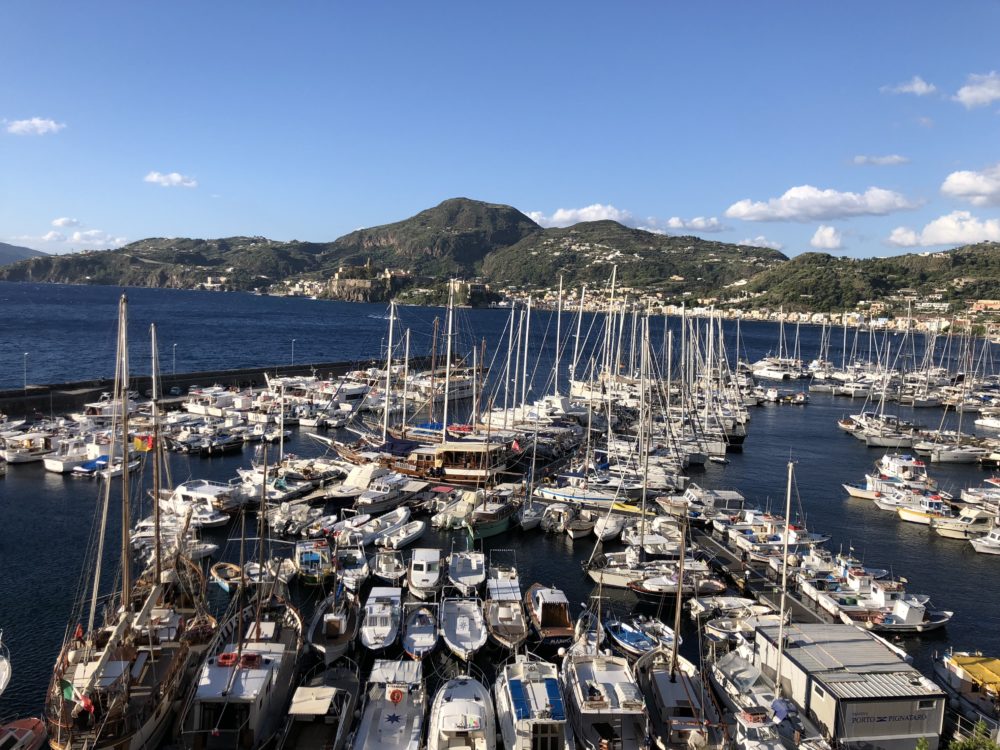
Santa Marina Salina is on the east coast — the island’s principal port and the main ferry and hydrofoil hub. Contact Porto delle Eolie marina on VHF Ch 16 or 11 before entering. The marina offers water, fuel, and electricity alongside good shelter. When the marina is crowded, anchor off the east side in 8–12m keeping clear of the hydrofoil lanes. The village itself is one of the most elegant in the archipelago: a long traffic-free main street of 19th-century houses converted into boutiques, restaurants, and a Wine Museum. No cars on the main street.
Pollara Bay
Pollara sits on the northwest coast inside a collapsed prehistoric volcanic crater — a near-perfect natural amphitheatre of sheer black rock rising above a small beach. It became internationally famous as the filming location for Il Postino (The Postman, 1994) directed by Massimo Troisi. The beach itself has partially eroded, but the cove and the cliff lighting at sunset are extraordinary. Ancient boat shelters (balate) carved into the rock along the cliff face connect by steep stone steps.
⚠ Pollara approach: Enter from the NW, keeping between Punta Perciato and Scoglio Faraglione. The entrance is narrow and the bay is subject to wind shifts and surge, especially for larger vessels in unsettled conditions. Best used as a daytime anchorage — leave before nightfall if the forecast is uncertain. Depths 5–10m on sand and rock.
What to See & Do
Monte Fossa delle Felci — Highest Peak in the Aeolians
At 962m, Monte Fossa delle Felci is the highest point in the entire Aeolian archipelago. The trail starts from Valdichiesa, the valley between the two volcanic cones. On a clear day from the summit: all seven Aeolian Islands, a smouldering Stromboli on the horizon, and the Sicilian coast. Excellent hiking — take water and start early.
Pollara — Il Postino & the Sunset
The village of Pollara is a 30-minute drive or scooter ride from Santa Marina. From the belvedere above the bay, the view at sunset — cliffs turning red and gold, the Faraglione rock silhouetted against the light — is among the finest in the Aeolians. The Sagra del Cappero (Caper Festival) is held in Pollara on the first Sunday of June every year.
Lingua — Granita at Da Alfredo
Lingua is the small village on Salina’s southeastern tip, built around an ancient Roman salt lagoon. The granita at Da Alfredo here is considered legendary — mulberry, fig, and almond flavours. Always served with a fresh warm brioche. An essential stop. A coastal path connects Lingua to Santa Marina on foot.
Malfa — Vineyards & Michelin Star
On the north coast, Malfa is a peaceful village of whitewashed houses and panoramic terraces over the sea towards Panarea and Stromboli. The island’s most celebrated restaurant is here: Il Signum, with a Michelin star — chef Martina Caruso cooks with island ingredients including fresh fish and garden vegetables. Fenech Winery in Malfa is an excellent, informal Malvasia tasting stop.
Malvasia Wine & Capers
Salina is the native land of Malvasia delle Lipari DOC — a golden, aromatic dessert wine. After phylloxera destroyed 90% of the vines in 1890, viticulture recovered and producers now also make excellent dry Malvasia. Key wineries: Hauner and Tenuta Capofaro (both with tastings and vineyard visits). Salina capers — a Slow Food Presidium product — are picked by hand, last up to 3 years, and appear in everything from pasta to pesto to gelato. Buy directly from producers in Santa Marina.
Rinella & South Coast
Rinella is a tiny fishing village on the south coast with a black sand beach and a relaxed, local atmosphere. Pa.Pe.Ró al Glicine in Rinella is famous for a surprising speciality: ricotta granita with candied capers — strange on paper, exceptional in practice.
Getting Around
Salina has the best road network in the Aeolians. Scooter rental from Santa Marina is the most flexible option — electric scooters now available. Local bus connects all main villages. The island is small enough to circumnavigate by road in a few hours, with stops in all six villages: Santa Marina, Lingua, Malfa, Pollara, Leni, Rinella.
Sailor’s tip: Anchor at Pollara for the sunset, then motor round to Santa Marina for the night — it’s a short passage and the marina is comfortable for an overnight stay. Next morning: rent a scooter, ride to Malfa for a Malvasia tasting at Fenech, continue to the Pollara belvedere on foot, then back to Santa Marina for lunch and provisioning before departing for Stromboli. Two days on Salina is the minimum; it rewards a slower pace.
✅ Safety Checklist
- Santa Marina: VHF Ch 16/11 — call Porto delle Eolie before entering
- Santa Marina anchor: stay clear of hydrofoil ferry routes on east side
- Malfa/Scalo Galera: very limited space, often crowded with local boats
- Pollara: narrow entrance — enter from NW only; wind shifts and surge possible; not recommended overnight for larger vessels
- Rinella buoy field: seasonal — confirm availability before arrival
- Keep clear of hydrofoil lanes near all main ports in season
- Provisioning: Santa Marina has the best shops — stock up here