SeaTV · Sporades Islands · 7-Day Route
Our 7-Day Sporades Sailing Route — The Good, The Challenging & The Real
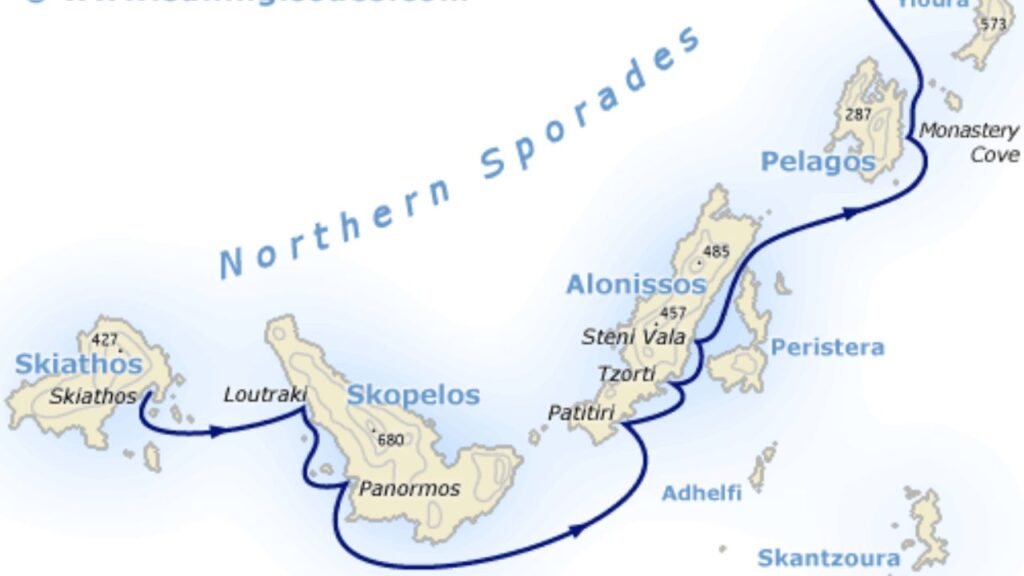
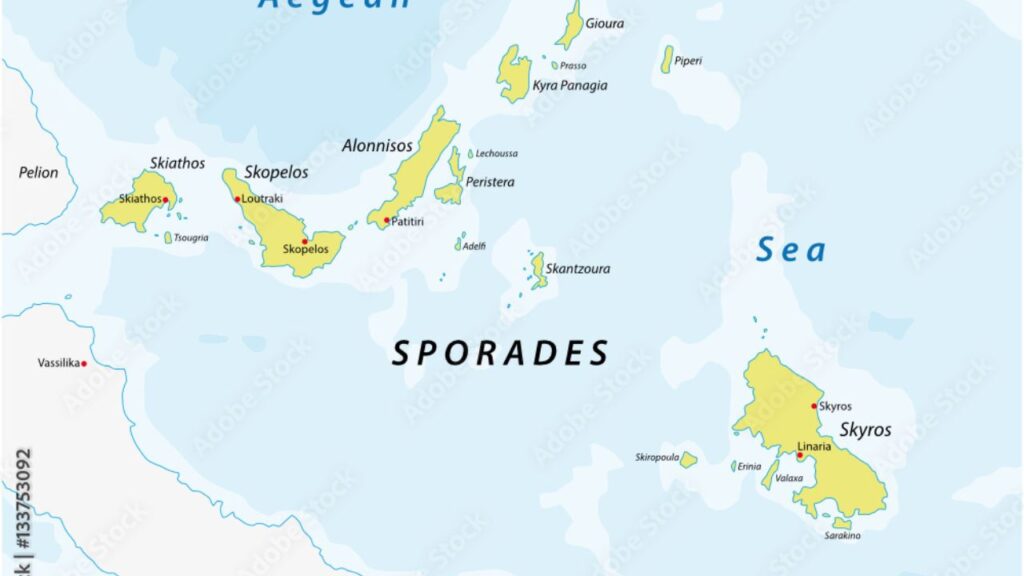
September 2025. Six days exploring the Greek Sporades. This is our actual sailing route — what worked, what didn’t, and the storm-driven decision that ended the trip a day early. Real-world skipper notes, not a brochure.
If you’re planning a Sporades sailing itinerary, a Skopelos or Alonissos charter, or departing from Volos Marina — this page is built to help you plan smarter. We sailed this route in September 2025 from Volos. The boat was a 45-foot charter with a list of pre-existing problems (broken bow thruster, unreliable depth gauge), the weather turned on us, and we had to make a hard call about heading home early. Everything worked out. None of it was perfect. That’s the point.
⚓ Route Highlights — In One Minute
→ Boat reality: A 45-foot charter with issues — bow thruster out, unreliable depth gauge, onboard quirks
→ Skopelos base: Med-mooring at Neo Klima · explored western coves
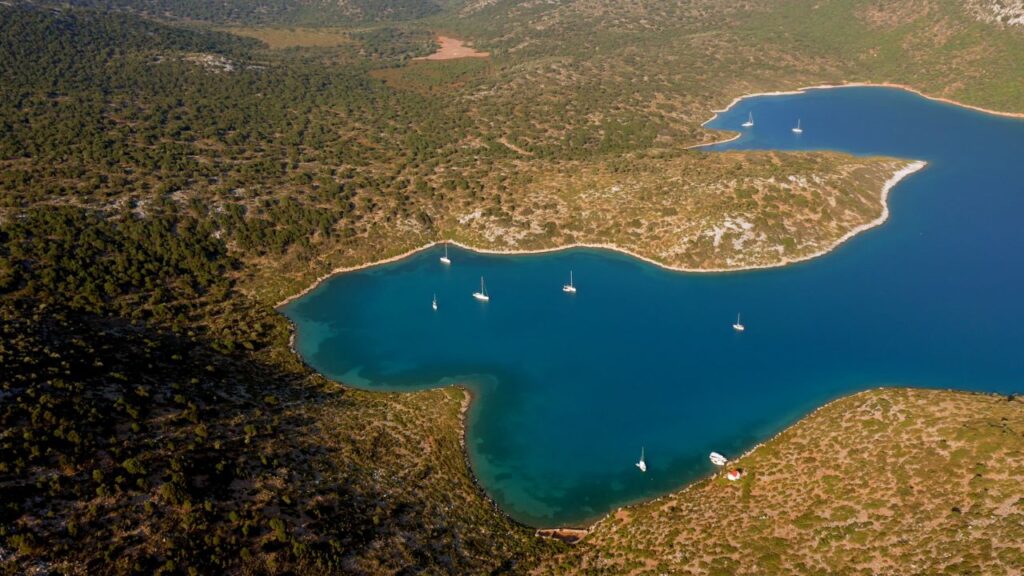
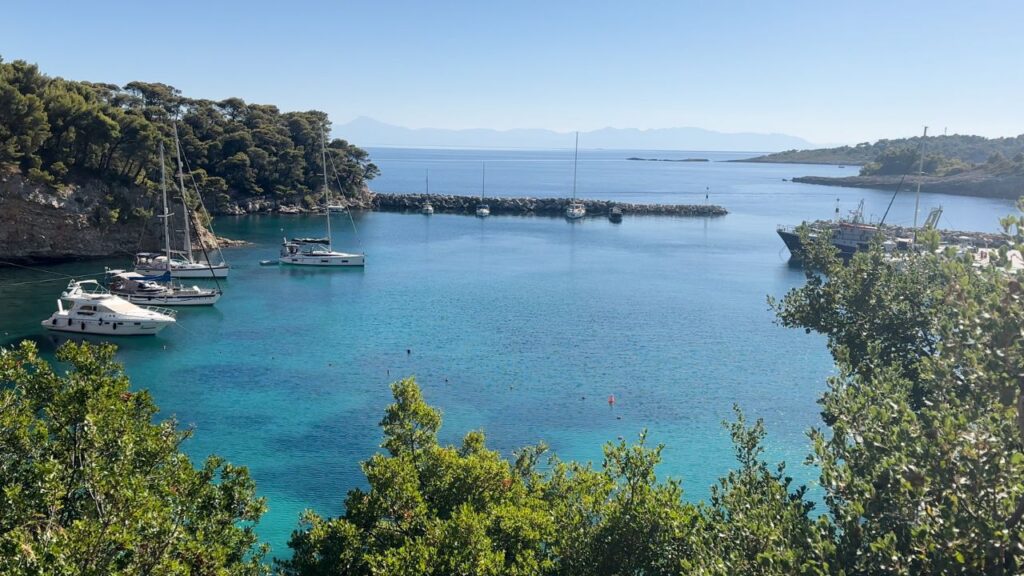
→ Marine Reserve magic: Turquoise water, calm weather, excellent holding on muddy bottom
→ Alonissos decisions: Crowds and shallow keel-touch at Steni Vala, pivoted to other stops
→ Safety lesson: Sea urchins at Votsi — pack water shoes
→ Smart weather call: Returned early to Volos before conditions worsened
Day 1 — Check-in → Agia Kiriaki
After charter check-in we departed at 3:00 PM for our first anchorage at Agia Kiriaki — a small bay with a taverna dock. The anchorage we chose, on a reputation-based recommendation, reminded us: not every recommendation is golden. The bay itself was fine; the dock dining wasn’t what we’d been told to expect. First lesson of the week: verify recommendations on arrival before committing to overnight.
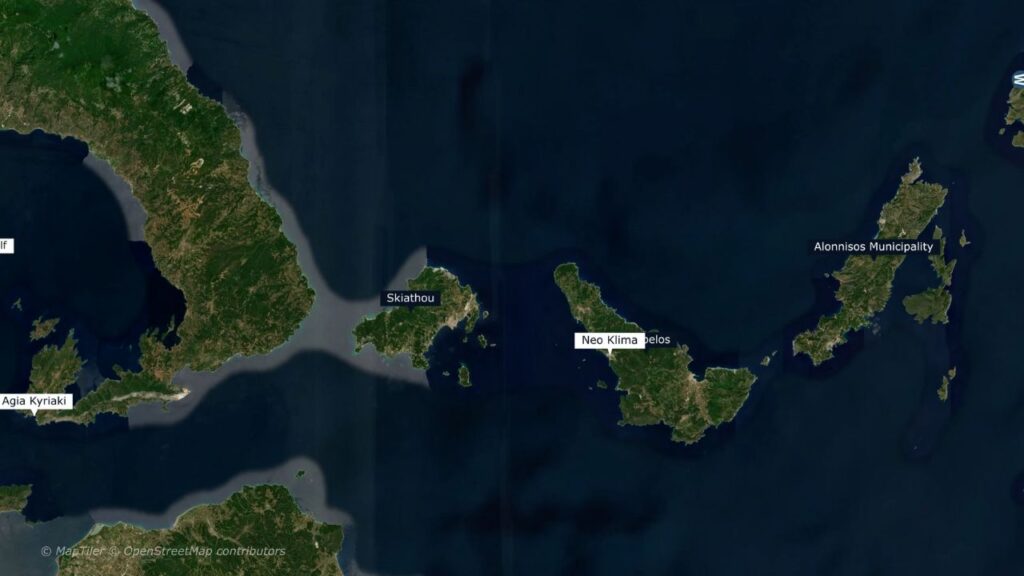
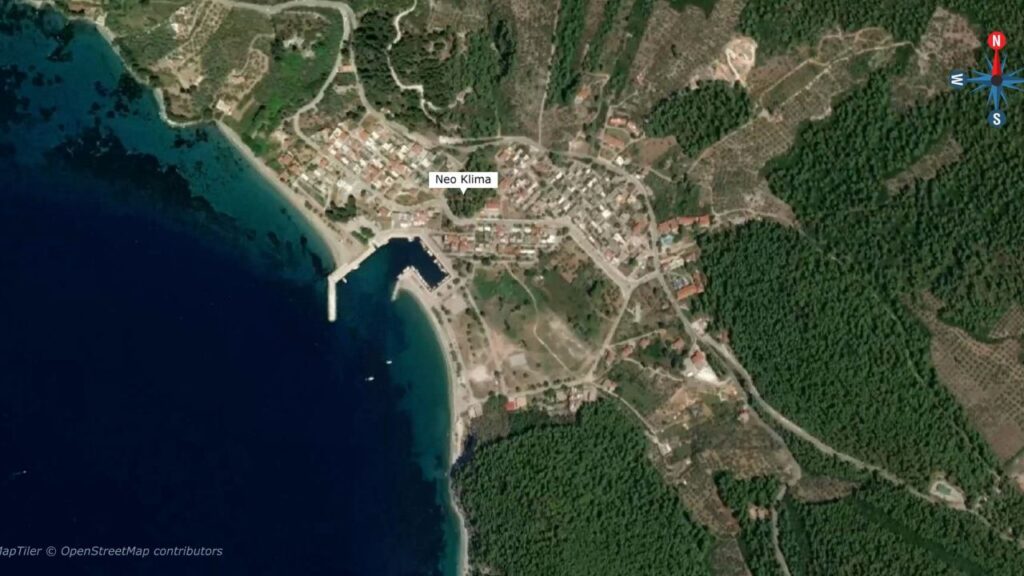
Day 2 — Skipping Skiathos → Skopelos (Neo Klima Marina)
After morning coffee and a drone flight, we headed straight to Skopelos, skipping Skiathos entirely — Skiathos is the busiest of the four Sporades islands, and we’d budgeted our days for the quieter ones.
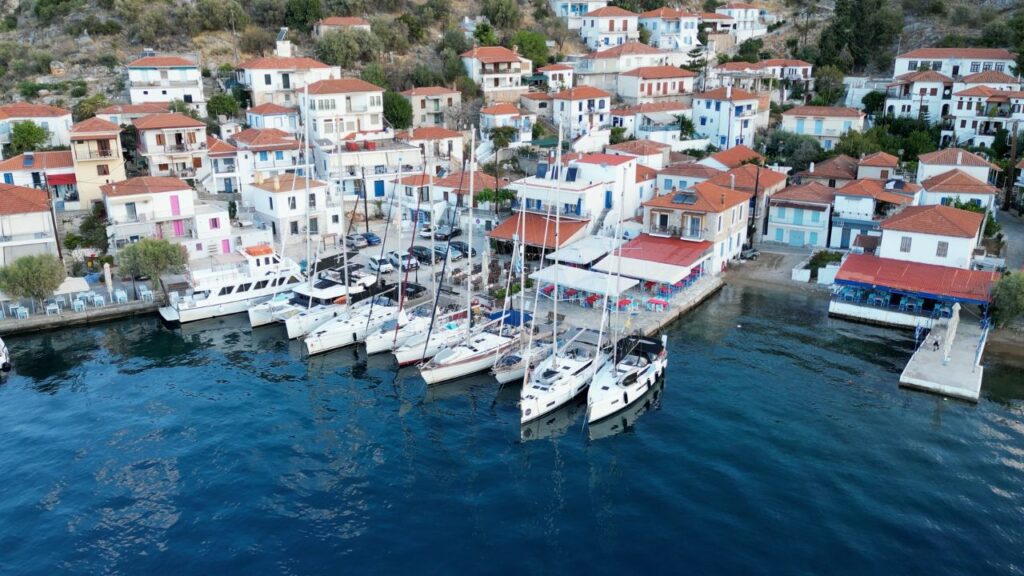
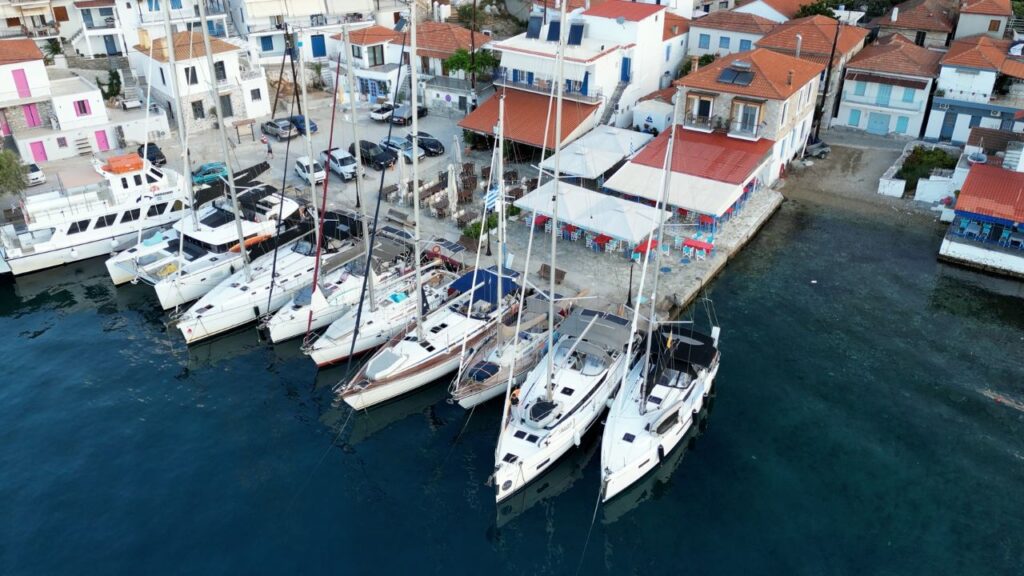
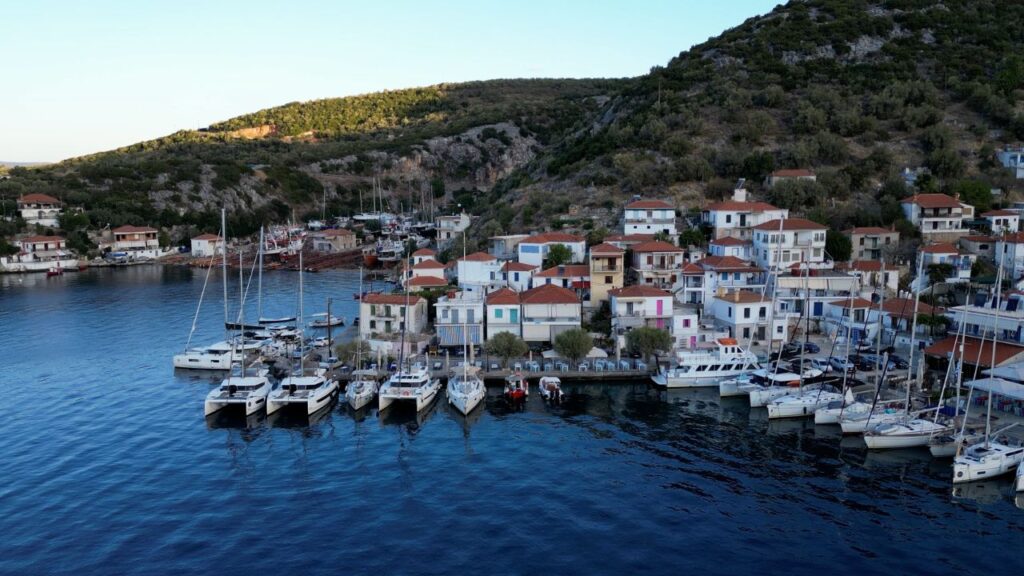
Mooring · Neo Klima Marina · Mediterranean-Style
Method: Drop the anchor, reverse in, secure stern lines to the dock. Standard Med-mooring drill. Brief the crew before the manoeuvre — roles assigned, communication clear.
Onshore: We rented a car, explored the island, and swam. Dinner ashore — the restaurant on the LEFT side of the marina is the better choice, and the ribs are worth ordering.
Day 3 — Skopelos Exploration (Western Bays + Northern Marina)
A full Skopelos day — the western bays, the northern marina, and the coves around the island that are genuinely worth the time. We explored both by boat and by car, which lets you cover ground in a way that pure-sailing days don’t.
It was Rosh Hashanah, so we celebrated with a moussaka dinner — the restaurant on the RIGHT side of the marina was less crowded, and the moussaka was excellent. Pro tip from our experience: in season, the “less popular” choice often turns out better.
Day 4 — The Marine Reserve · Turquoise Water + Perfect Calm
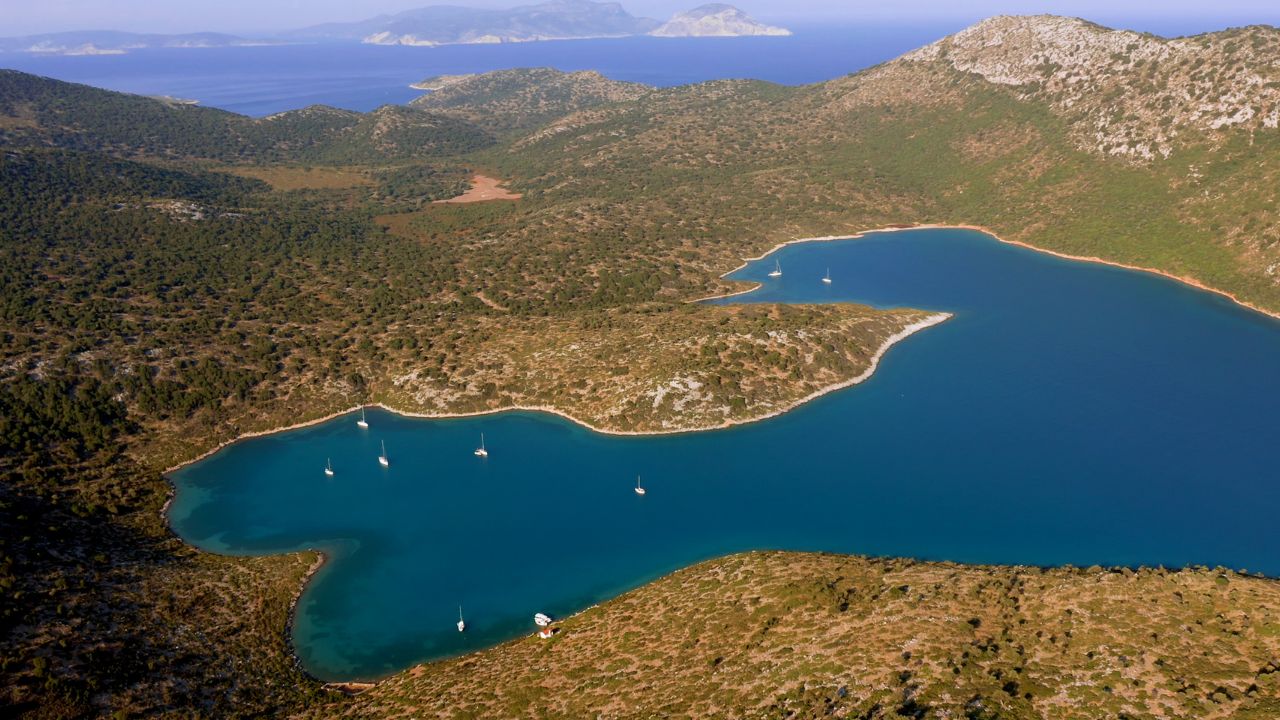
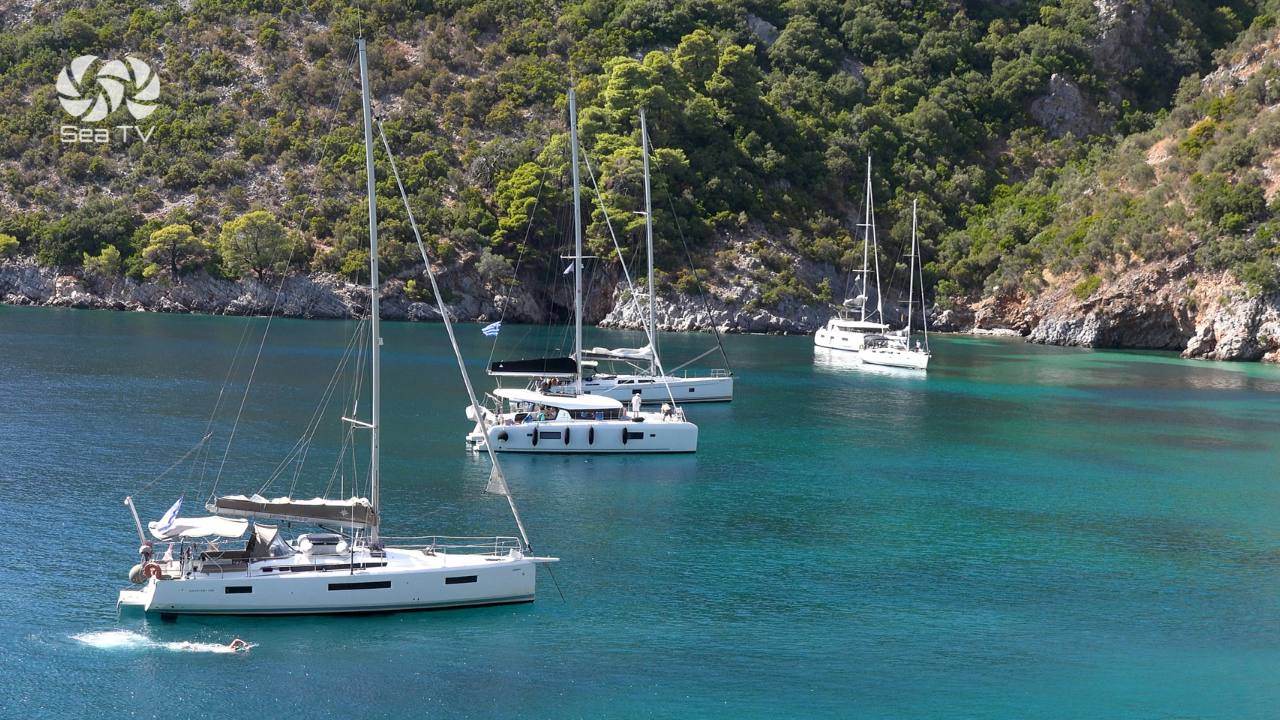
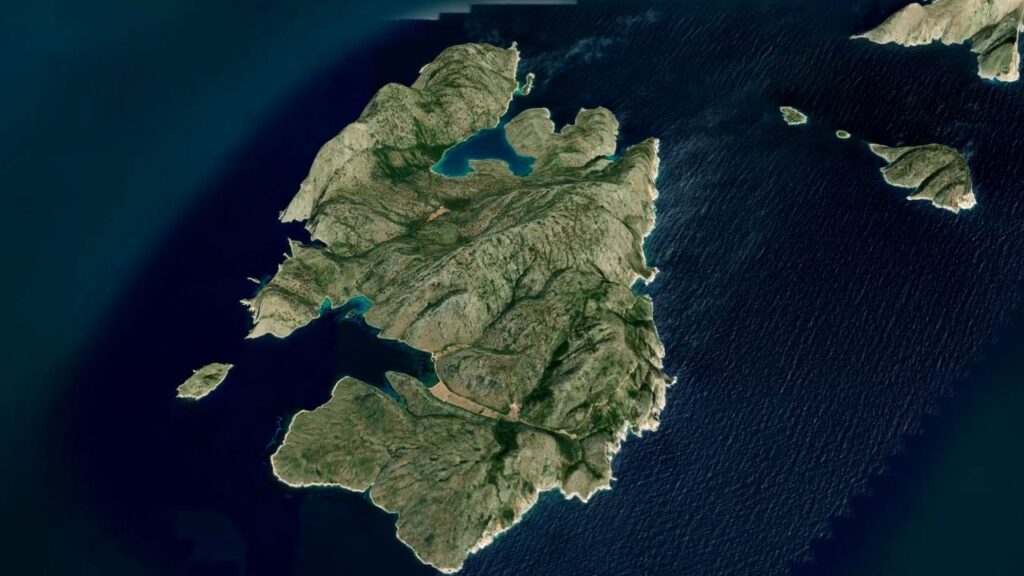
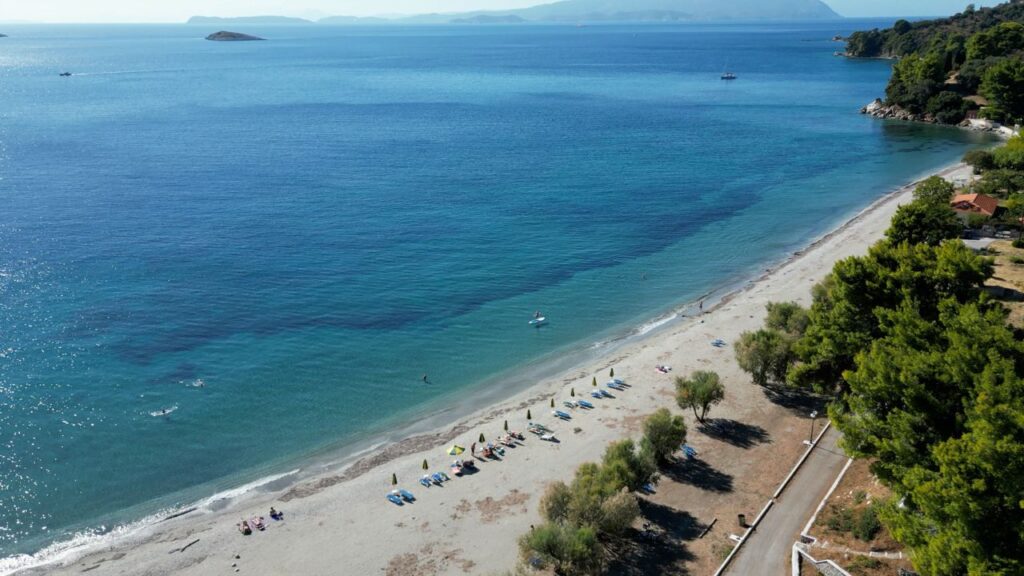
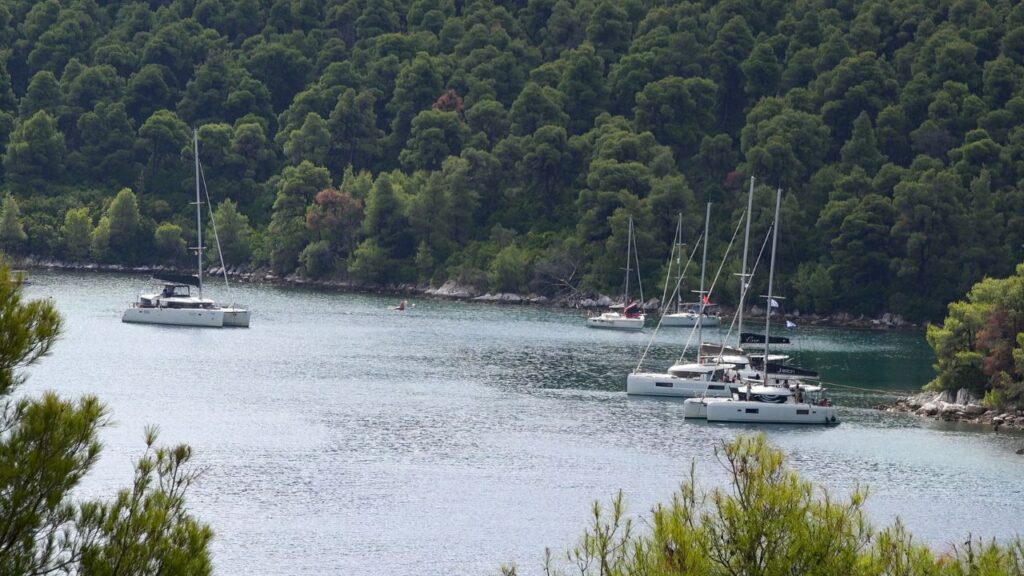
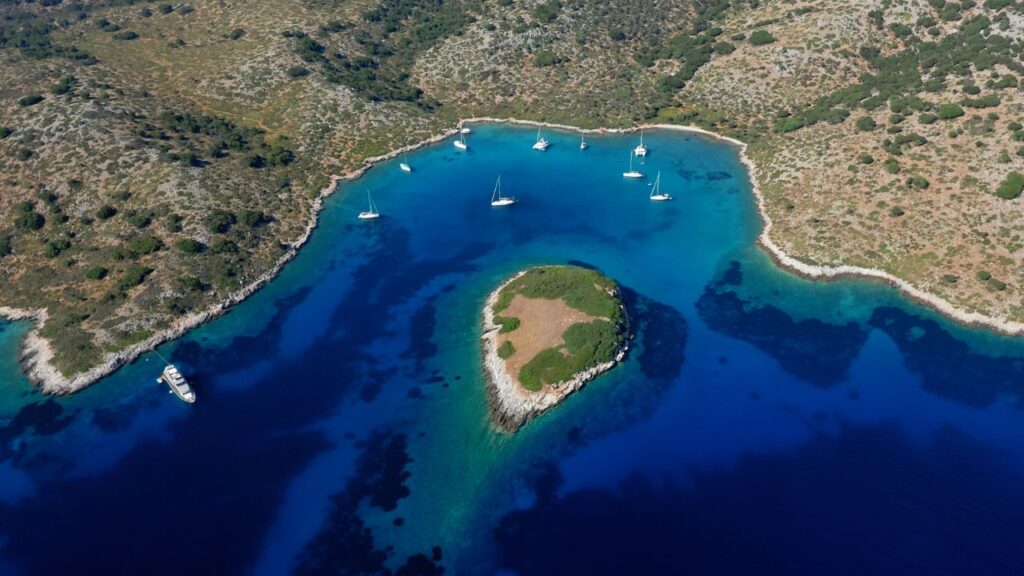
This is what we came for. We departed at 9:00 AM toward the Alonissos Marine Reserve in the southern bay. The water was true turquoise. We anchored normally on the hook — the bottom was muddy, and the holding was excellent.
A flawless sailing day. Calm weather, clear visibility, the kind of cruising that justifies the whole charter.
That night: Complete darkness, stars overhead — pure sailing bliss. The reserve gives you the dark-sky experience you can’t find anywhere with light pollution.
Day 5 — More Reserve Time → Alonissos (Steni Vala, Chrisi Milia, Votsi)
We stayed longer in the reserve than originally planned — the right call when you’ve found a place this good. Later in the day we headed to Alonissos. With no wind, we motored across.
We aimed for Steni Vala, but it was very crowded and our keel touched bottom on the approach — so we moved on. Trust the depth on a shallow approach when the boat tells you no.
Next stop: Chrisi Milia. Crystal-clear water, dramatic setting. End-of-season reality, though — some tavernas were already closed. Lesson: late September has its trade-offs.
We continued to Votsi, a small charming harbour. And here we got the safety lesson of the week.
⚠ Safety Tip — Sea Urchins at Votsi
Votsi has sea urchins near the edges of the harbour. Amos stepped on one while tying up — luckily it was only a graze, but the experience could have been much worse.
Pack water shoes. You do not want urchin spines mid-charter. This applies to many small Greek harbours, but Votsi is the one that taught us the lesson.
Day 6 — Patitiri Run + Storm Forecast + Decision Time
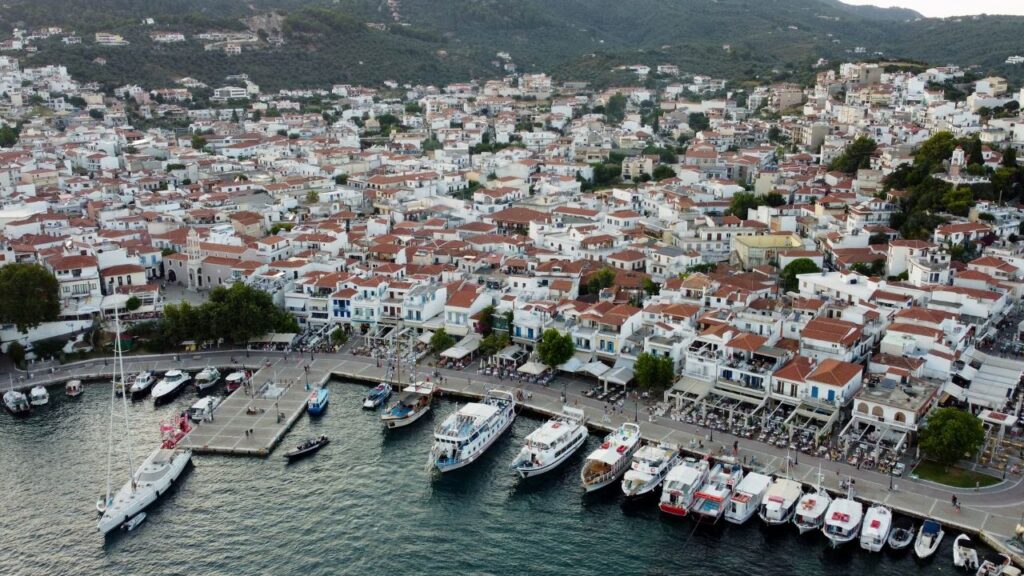
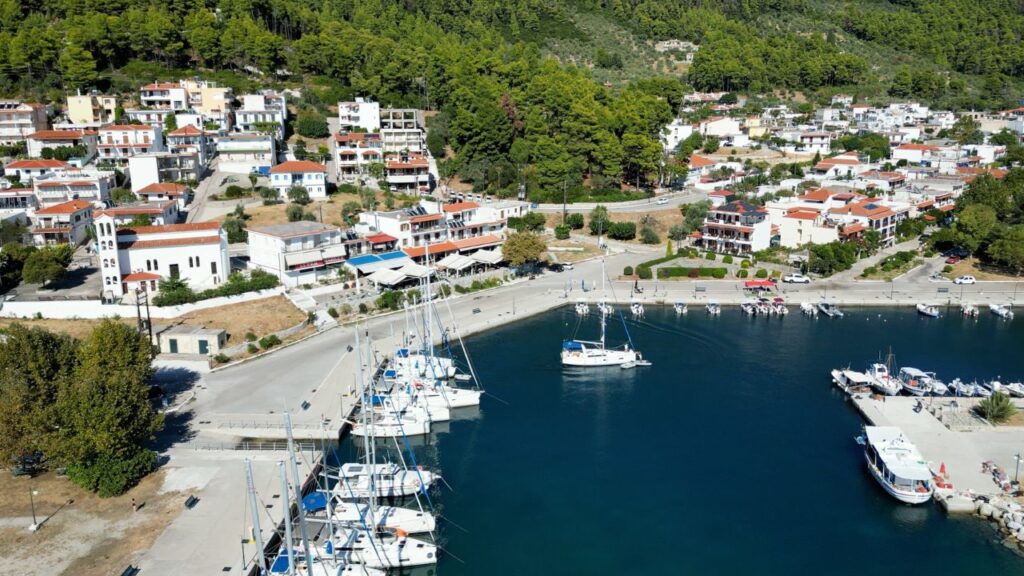
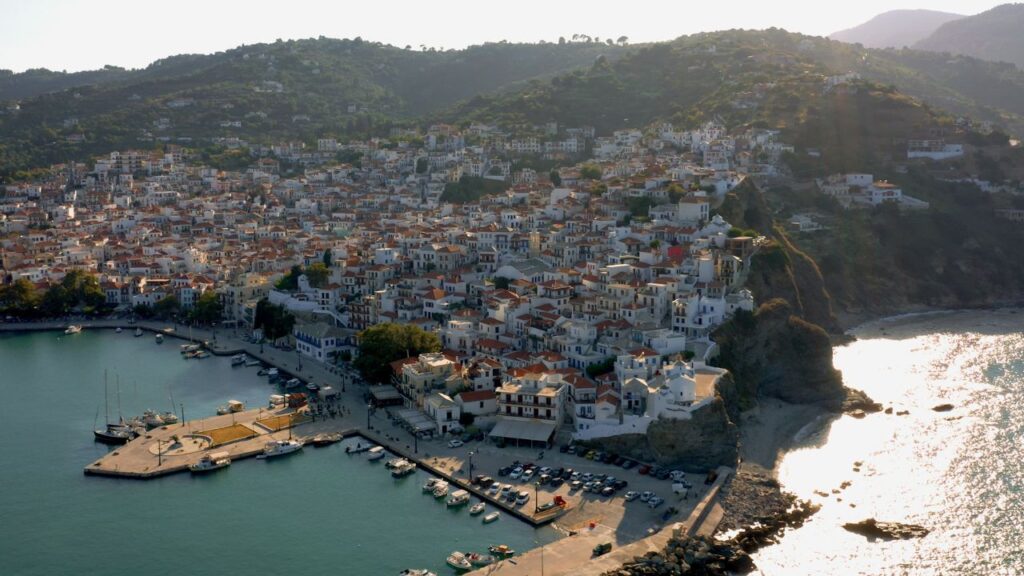
Amos and I rented a car (about €50) and drove to Patitiri — the main town of Alonissos. Patitiri has supplies, shops, restaurants — the practical hub for any extended Sporades charter. After errands and drone shots from the heights above the town, we were back onboard exhausted by 9:30 PM.
The forecast showed a storm approaching. Day 6 still looked acceptable; Day 7 did not. We had a choice: squeeze in another sailing day — or play it safe and return early to Volos Marina.
⛈ The Weather Call — Why We Returned Early
A storm was coming, and we did not want to gamble with tight timing. We committed to reaching Volos Marina before conditions worsened.
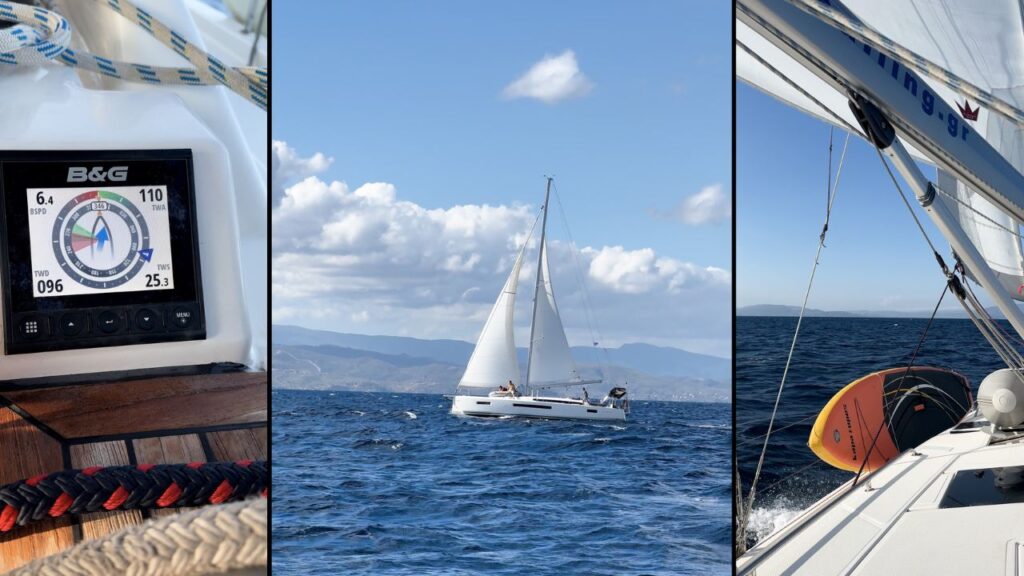
Entering the Pagasetic Gulf, the wind increased significantly — but we were heading toward safety and shelter, which makes a building wind much easier to manage psychologically and tactically. We reached Volos as evening approached: tired, a bit shaken, but safe.
The real takeaway
A perfect charter is a luxury. A safe charter is the goal.
Sometimes the best skipper move is the one that ends the trip early. We came home a day short of the original plan — and got everyone home safe with a strong story instead of a marginal extra day.
Skipper Notes — Mooring, Holding, Safety
Mediterranean-style mooring (Neo Klima)
Med-mooring means dropping your anchor, reversing toward the quay, then securing stern lines. Always plan your approach early, brief crew roles before the manoeuvre, and keep communication calm and clear. The bow thruster being out (as on our charter) makes this harder — practice on a calm day before you need it.
Holding & bottom type (Marine Reserve)
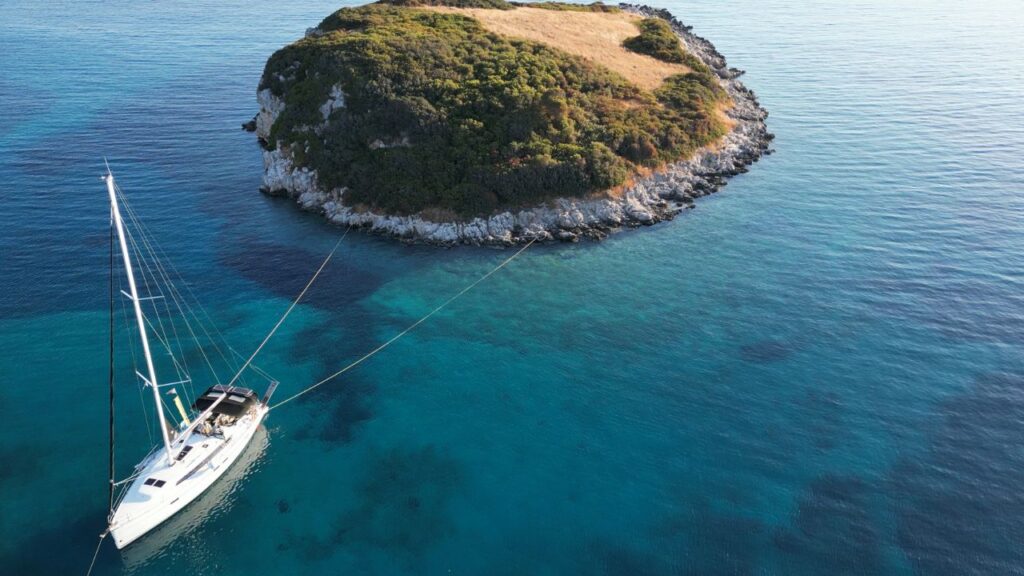
Muddy bottoms can provide excellent holding when set properly. Confirm your set, watch for drift, and allow swing room. The Sporades Marine Park bays specifically reward patience on the anchor — drop, set hard, snorkel down to verify if you can see the bottom.
Depth awareness (when instruments are unreliable)
Our depth gauge was unreliable for the whole week. Run conservative margins, use visual cues (water colour, contour gradients), consult charts carefully, and avoid tight or shallow anchorages unless you have high confidence in your approach and exit. The Steni Vala keel-touch happened because we trusted the gauge slightly too long.
End-of-season reality (September)
September can be magical — but in late season, some tavernas and services may close earlier than expected. Keep a backup plan for food and supplies. Stocking up at Patitiri saved us multiple times.
Key Takeaways for Your Sporades Charter
Do a rigorous check-in. Test every system that can impact safety and comfort — the bow thruster, the depth gauge, the head, the windlass, the engine cooling, the dinghy outboard, the navigation electronics. Note any pre-existing damage on the inventory before you sign.
Have flexible routing. Crowds (Steni Vala), depths (the keel-touch), and equipment issues can change plans fast. The route I started with isn’t the route I sailed — that’s normal Greek charter life.
Anchorages aren’t equal. Verify, evaluate, and be ready to move. The reputation that gets you to a bay is rarely the reality you find there. Stay flexible.
Pack water shoes. Sea urchins at Votsi are not unique to Votsi. Many small Greek harbours have them along the edges. The shoes weigh nothing; the cost of skipping them can be a charter-ending injury.
Weather decisions define trips. Returning early can be the smartest move you make. Don’t let sunk-cost reasoning trap you in a bad-weather decision. The best skippers get everyone home safe, not the best photos.
✅ Pre-Departure Safety Checklist
▢ Bow thruster, depth gauge, windlass, engine systems all tested at check-in
▢ Marine Park permit purchased online before departure
▢ Water shoes packed for every crew member
▢ Patitiri identified as Alonissos resupply point
▢ Forecast checked with realistic margins for storm contingency
▢ Backup plan for early return to Volos Marina
▢ September end-of-season reality understood (some tavernas closed)
▢ Crew briefed on Med-mooring procedure
Emergency & Service Numbers — Sporades Region
European Emergency: 112
Coastguard Distress (VHF Ch. 16): Universal
Coastguard Working (VHF Ch. 12): Per region
Volos Port Authority: VHF Ch. 12 / 16
Skopelos Port Authority: VHF Ch. 12 / 16
Alonissos Port Authority (Patitiri): VHF Ch. 12 / 16
Olympia Radio (VHF Ch. 03/86): Greek HF/VHF maritime service
Watch the SeaTV Sporades Series
Drone passes over the Marine Reserve at sunrise, the Med-mooring approach into Neo Klima, the keel-touch at Steni Vala, the storm-driven return to Volos Marina, and Patitiri from the air — the actual September 2025 trip as we sailed it. Free for members.
Related SeaTV Pages
Sporades · Anchorage Detail
→ Best Anchorages of Skopelos · 4 main bays with coordinates
→ Kyra Panagia & the Alonissos Marine Park · permit info, 4 marine park anchorages
Six Days. Three islands. One smart weather decision.
Not a perfect charter — but an incredible adventure, and everyone came home safe. That’s what counts.
“This wasn’t the perfect charter. The boat had problems, the depth gauge couldn’t be trusted, the storm came in early, and Amos found a sea urchin with his foot. But the Marine Reserve gave us turquoise water and a starlit night, and we got everyone home safe. The Sporades reward preparation and humility — pack water shoes, watch the forecast, and know when to head home.”
— SeaTV Visual Pilot · Sporades · September 2025