
Sailing the Aeolian Islands: How to Read the Wind Before You Drop Anchor
By Sigal Segev Kurz · SeaTV Visual Pilot · Updated April 2026 · 7 min read
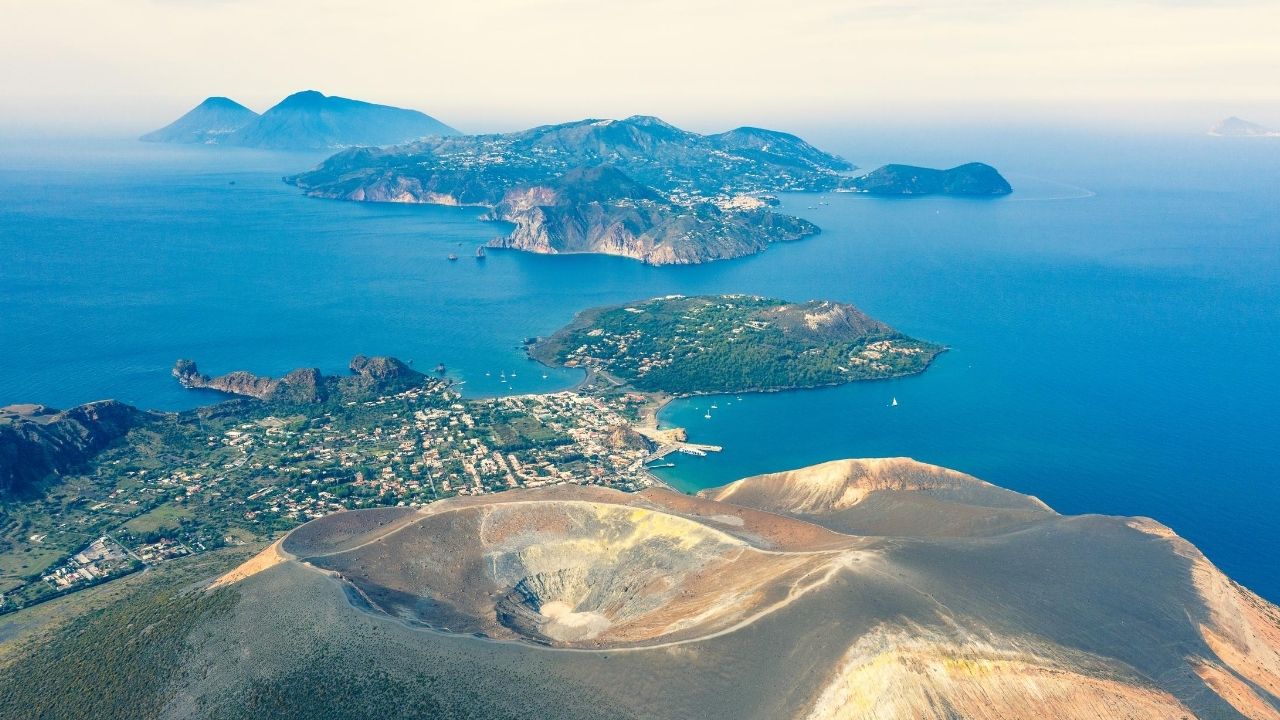
The Aeolian Islands — Isole Eolie — are a volcanic archipelago of seven islands north of Sicily. For sailors, they offer some of the most dramatic cruising in the Mediterranean: active volcanoes, deep cobalt water, and harbors carved straight out of lava cliffs. But they come with one rule that overrides everything else: where you anchor depends on which wind is blowing.
Every harbor in the Aeolians is exposed to at least one direction. There are no all-weather marinas. Plan around the wind, and the islands open up to you. Ignore it, and you'll spend the night dragging anchor or running for shelter at 0200. This guide breaks down the seven Mediterranean winds you need to know, and the lee-side anchorage to choose for each.
In this guide
- The seven winds of the Mediterranean
- Anchorage strategy by island
- Lipari — the hub
- Vulcano — the closest crossing
- Salina — the green island
- Panarea — small and restricted
- Stromboli — the active volcano
- Filicudi — small and specific
- Alicudi — the wild west
- Pre-departure checklist
- Emergency numbers
- Frequently asked questions
The Seven Winds of the Mediterranean
Italian sailors have named the winds for centuries. The rosa dei venti — wind rose — appears on every Italian chart and cruising card. Before you sail the Aeolian Islands, learn these seven names. They're how locals talk about weather, and they're printed on every harbor information board.
| Wind name | Direction | Character |
|---|---|---|
| Tramontana | North | Cold, dry; strong in winter and shoulder seasons |
| Grecale | Northeast | Builds short, steep seas in the channels |
| Levante | East | Humid, persistent; can last for days |
| Scirocco | Southeast | Hot, sand-laden from North Africa; haze and confused seas |
| Libeccio | Southwest | Strong, gusty; dangerous on western coasts |
| Ponente | West | Generally moderate |
| Maestrale | Northwest | The dominant summer wind; 15–25 kn, gusts above 35 kn |
Anchorage Strategy by Island
The principle is always the same: anchor on the lee side — the side opposite to where the wind is coming from. Below is a working summary of each island and its sheltered harbors, in the order you're most likely to use them on a typical week-long Aeolian charter.
Lipari — The Hub
Lipari is the largest island and your best logistical base. Marina Lunga and the Pignataro anchorage on the east coast are well sheltered from Maestrale, Libeccio, and Ponente. When the wind shifts to the east — Levante, Grecale, or strong Scirocco — cross to Porto Ponente or Val di Muria on the west side.
Five service columns at Marina Lunga provide water and electricity. Fuel is available at the Marina Lunga pontoons. The town has full provisioning, including a daily fish market, supermarkets and chandlery.
Vulcano — The Closest Crossing
Just two miles south of Lipari. Porto Levante on the north coast is the standard stop, sheltered from Libeccio, Ponente, and Maestrale. For southerly winds, Gelso on the south coast offers shelter from most northerly directions.
Salina — The Green Island
Santa Marina Salina and Lingua on the east coast work for Maestrale, Libeccio, and Ponente. Pollara on the west — the famous Il Postino cove — handles Grecale and Levante. Rinella on the south is the choice for Tramontana and Maestrale.
Fuel is available at Santa Marina, with water on the tourist mole.
Panarea — The Smallest and Most Restricted
The smallest of the seven, surrounded by reefs and small islets — Basiluzzo, Lisca Bianca, Dattilo. Anchor on the north and east sides — San Pietro, Baia Milazzese — for protection from Maestrale, Libeccio, and Ponente. Average depth on the recommended anchorage side is around 7 metres.
Stromboli — The Active Volcano
There is no real harbor at Stromboli. Anchor well off the beach at Ficogrande on the northeast side for Libeccio, Ponente, Maestrale, and Tramontana. Ginostra on the southwest is the alternative for easterly and southerly winds, but it's tiny, exposed, and only accessible to small craft.
Filicudi — Small and Specific
The small port at Filicudi Porto is reserved for ferries and hydrofoils. Anchor approximately 100 metres off, southeast side, in good weather. Pecorini on the southwest works in northerlies. Local mooring services (Pippo, I Delfini) operate buoys in season — recommended over anchoring on patchy ground near the small jetty.
Alicudi — The Wild West
The most remote and exposed of the seven. Alicudi Porto on the south is the only option, and only in fully settled weather. Anchor in front of the stone beach south of the small jetty.
Pre-Departure Checks (Italian Coast Guard Standard)
Before every passage in the Aeolians, the Italian Coast Guard recommends checking the following items. This isn't a formality — in these islands, the difference between a beautiful evening at anchor and a rough night at sea is usually one missed forecast.
Information to gather
- Weather forecast for the next 24–48 hours
- Local hazards: rocks, shallows, currents, anchoring points
- Local ordinances: prohibited or regulated areas
Boat checks
- Hull integrity, seacocks and through-hull fittings
- Bilge water and engine oil levels
- Hatches and ports closed and dogged
- Bilge pump operation
- Anchor secured on deck
- Propeller and rudder check
- Vessel name and registration number visible
- Fuel topped off
- Electrical system and navigation lights
- Engine test and cooling water flow confirmed
- Safety equipment, tool kit, first-aid kit on board
Emergency Numbers
- 1530 — Italian Coast Guard maritime emergency line
- VHF Channel 16 — always monitored
- VHF Channel 11 — Circomare Lipari and Vulcano (port operations)
Save these in your phone before you leave the dock. In an emergency, you don't want to be searching.
Frequently Asked Questions
What is the dominant summer wind in the Aeolian Islands?
The Maestrale, a northwesterly, is the dominant summer wind. It typically blows 15–25 knots and can gust above 35 knots, especially in the channels between islands.
What is the best base island for sailing the Aeolians?
Lipari is the largest island and the best logistical base. Marina Lunga and the Pignataro anchorage on the east coast are well sheltered from the Maestrale, Libeccio and Ponente winds, and the town offers full provisioning, fuel and water.
Can I anchor at Stromboli?
Stromboli has no real harbor. You can anchor off Ficogrande or Scari on the northeast side, well off the beach, and only in fully settled weather. If the forecast deteriorates, you must leave.
Is anchoring restricted at Cala Junco on Panarea?
Yes. Cala Junco anchorage is closed to all vessels from 1 June to 30 September each year as part of the marine protected area regulation.
What is the Italian Coast Guard emergency number?
The Italian Coast Guard maritime emergency number is 1530. VHF Channel 16 is always monitored. In Lipari and Vulcano, Circomare also operates on VHF Channel 11.
Plan Around the Wind
The Aeolians reward sailors who plan around the wind. Check the forecast in the morning, pick the lee side, and have a backup harbor in mind.
For full visual pilot videos of each island — entry, depths, services and shore — head to the SeaTV channel.
Written by Sigal Segev Kurz, founder of SeaTV — a visual pilot platform for sailors.
Related:
Aeolian Islands overview ·
More from the SeaTV blog ·
All Italy guides




Leave a Reply